Who this is for
Managing agents and building managers with a recurring leak that other contractors have sealed and sealed again. Developers and main contractors with water ingress in the defects period who need the cause established before anyone pays for a repair. Insurers and surveyors who need an independent test and report.
Most of the leaks we are called to have had at least one attempt at a repair already, usually a bead of sealant over the place where the water appeared. On a curtain wall or an aluminium window system that is rarely the entry point, and sealing drainage paths often makes the leak worse.
What we do
Investigation
We start with the history: where the water shows, when it started, what the weather was doing, what has been tried before, and what drawings or O&M manuals exist. Then we inspect inside and outside, identify the system and the details around the affected area, and plan the test zones and the access.
Controlled water testing
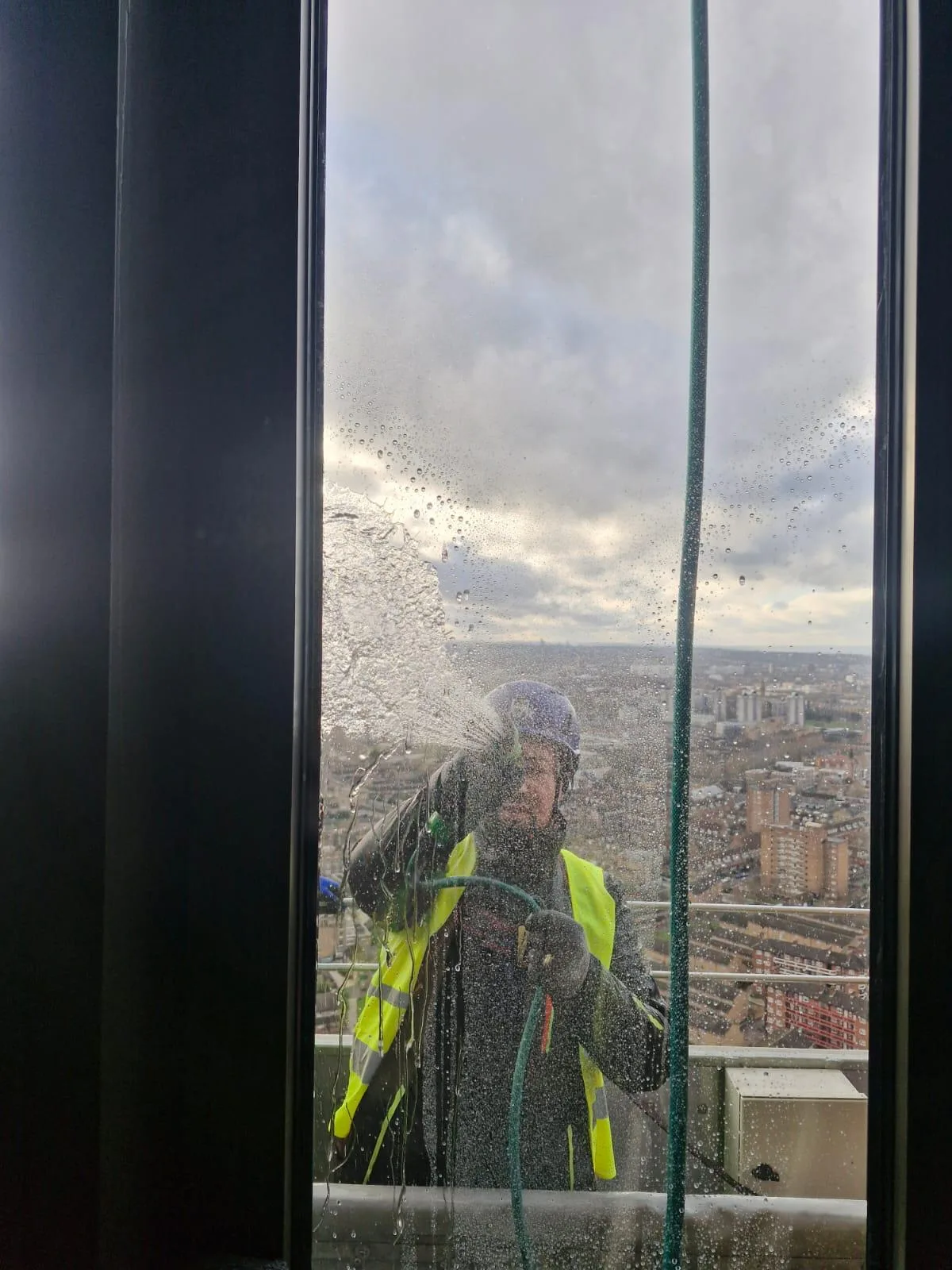
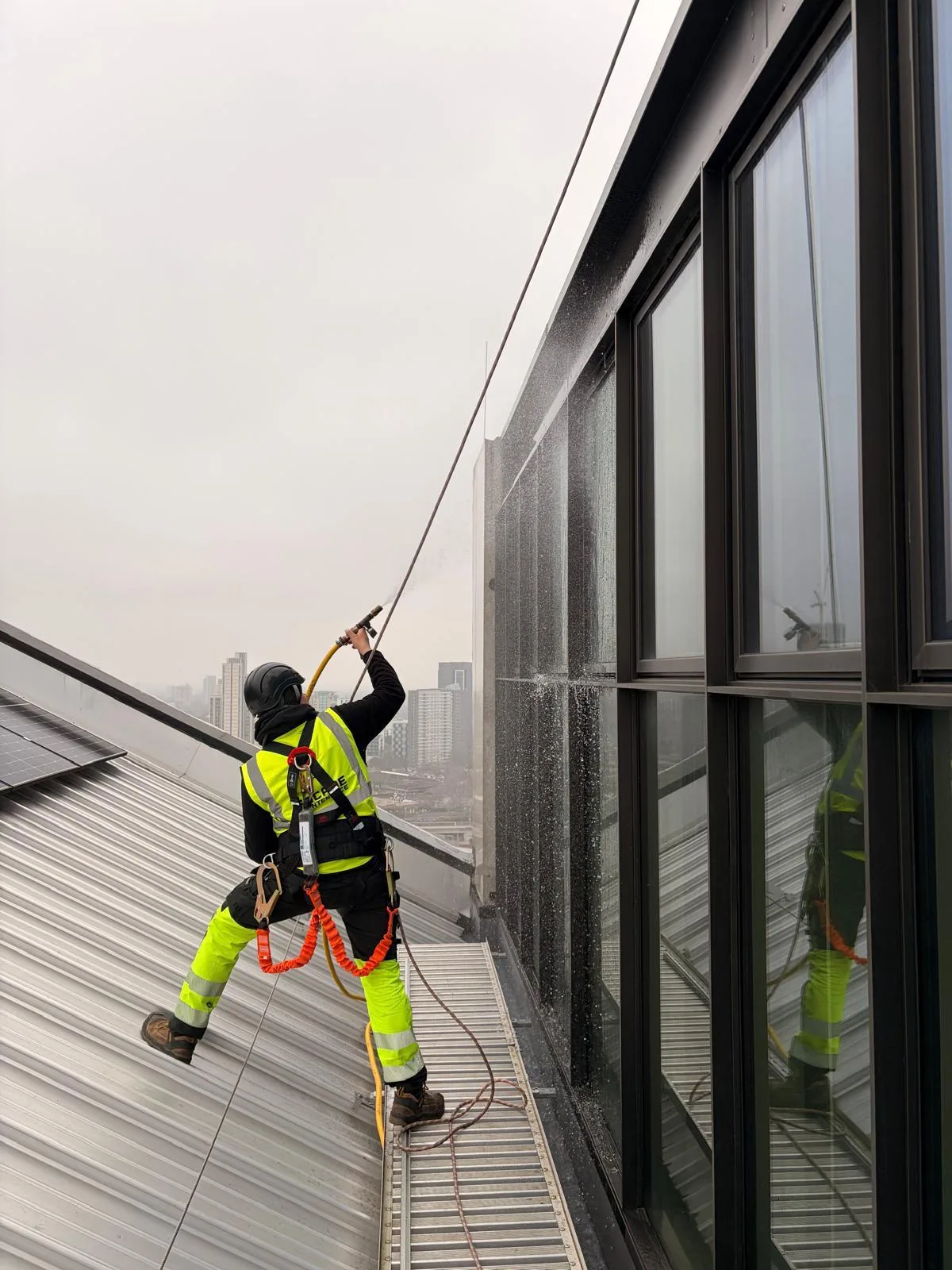
Testing is done zone by zone, from the bottom up, with a calibrated hose or spray bar held at a set distance and pressure for a set time, following the CWCT technical notes. One operative tests outside, from a cradle, MEWP, rope access or the roof, while a second watches inside and records exactly when and where water appears. That is how we tell a failed gasket from a blocked drainage slot, or a window from the cladding interface above it.
Repair
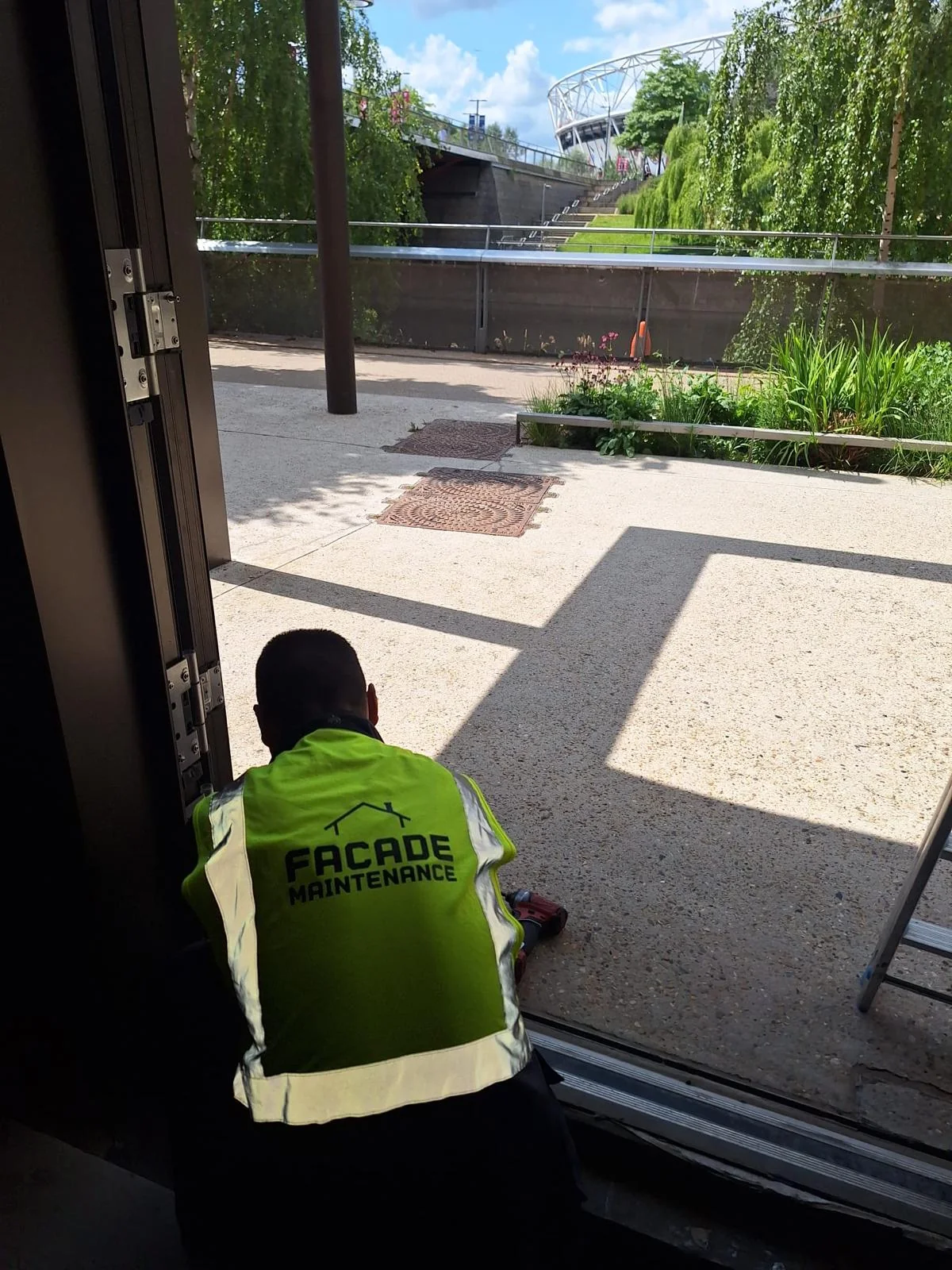
Once the route is known the repair is matched to the defect and the system: gaskets, pressure plate and cap seals, glazing re-beds, frame to structure seals, drainage clearance, membrane laps, flashings, copings and cladding interfaces. We carry parts for the common aluminium systems and source the rest from the manufacturer.
Re-test and report
After curing, the repaired zone is tested again by the same method. The report records the history, the test zones and results, photographs, the repair carried out and the re-test result, in plain language the freeholder, insurer or resident can follow.
Details we investigate
- Perimeter and movement joints between frames and the structure
- Glazing gaskets, beads, pressure plates and caps on curtain walling
- Drainage slots, weep holes and sill drainage
- Cladding interfaces, cavity trays and damp proof courses
- Copings, flashings, parapets and membrane laps
- Balcony thresholds, soffits and door sills
How a leak job runs
Call and history
Tell us where the water shows, when it started and what has been done. Photographs and any drawings help.
Survey and test plan
A surveyor inspects inside and out, identifies the system and sets out the test zones and the access needed.
Water test
Controlled testing zone by zone with an observer inside. You get the result on the day.
Repair, re-test, report
The agreed repair, a second test after curing, and a written report with photographs for the building file.
Questions building managers ask
Is a water test the same as a laboratory weather test?
No. Our tests are diagnostic site tests to CWCT methods, designed to find where water gets in. A formal performance test to a named standard has its own equipment and acceptance criteria. If your project needs one, tell us before the visit.
Can there be more than one source?
Yes, and there often is on older buildings. Finding and repairing one entry point does not prove the rest of the elevation is watertight. The report says what was tested and what was not.
What if the leak does not appear during the test?
Some leaks only show with wind-driven rain from one direction or after long periods of rain. If the test does not reproduce it we say so, suggest monitoring or a return visit in the right conditions, and never claim a leak is fixed that we did not see.
Do you need access inside the flat?
Usually yes, for the observer, and sometimes behind finishes to see the water path. We arrange this with the managing agent and the resident before the visit.
Can you do this on a live building with residents?
Most of our leak work is on occupied buildings. Testing is planned around residents, with notices where cradles or ropes pass windows.